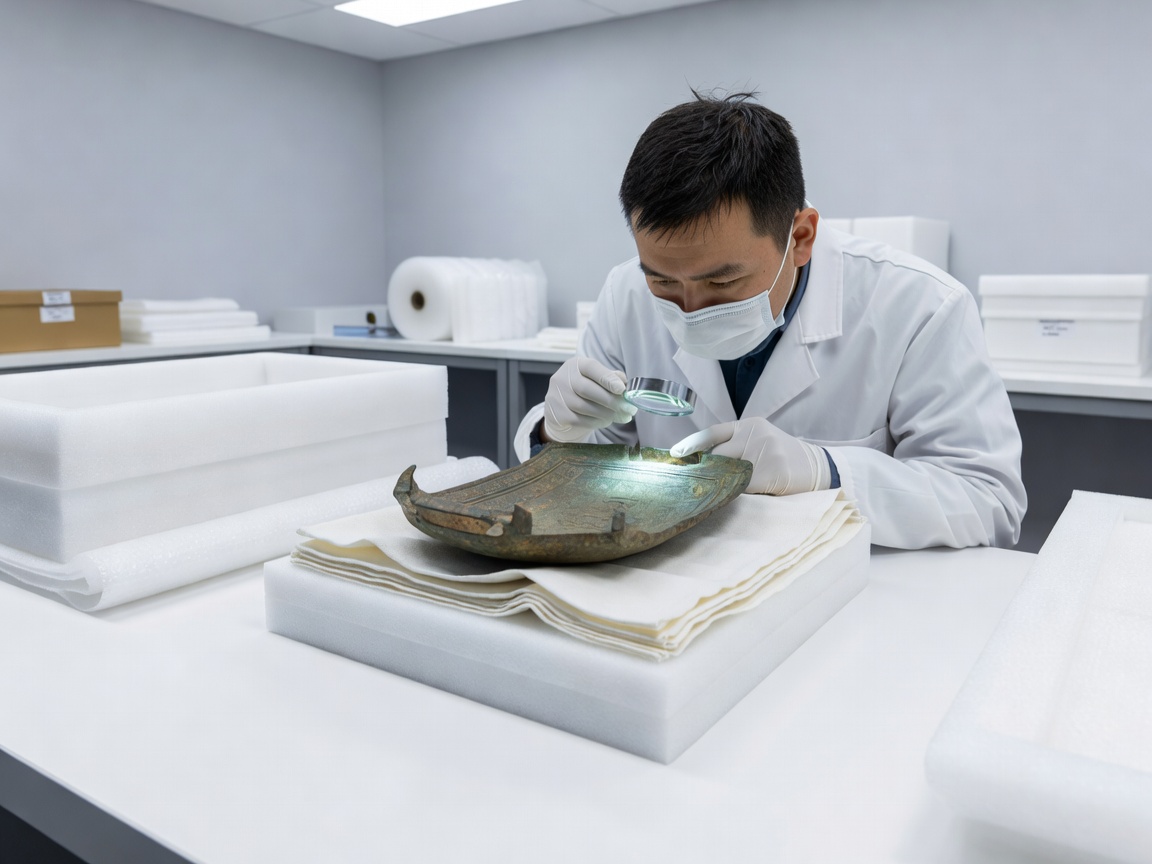
Why requirements differ
A ceramic vessel, a framed painting, a metal instrument and a composite sculpture do not respond to the same protective system. Their surfaces, structures and sensitivities differ. A brittle projection may need distributed support. A friable surface may require separation without contact. A heavy object may require a different base, access arrangement and movement plan from a lightweight but delicate object.
Object identification should be unambiguous. Record the collection reference, object name, dimensions, approximate weight where known, materials and any relevant handling restrictions. Dimensions should account for projecting elements and vulnerable features. If information is uncertain, the uncertainty should remain visible in the planning record.
Assessment fields
Useful fields include material composition, surface sensitivity, structural stability, loose or detachable parts, centre of gravity, lifting points and environmental sensitivities. The assessment is not a conservation treatment. It is a planning record that helps qualified personnel select an appropriate protective approach.
- Object identity and reference confirmed
- Dimensions measured or clearly qualified
- Weight and movement implications considered
- Fragile surfaces and projecting elements noted
- Handling personnel and equipment requirements identified
- Destination, access and staging constraints recorded
Protective materials and cushioning concepts
Materials are selected for their relationship to the object, not simply for availability. Separation layers can reduce unwanted contact. Soft materials may protect a stable surface but can be unsuitable where pressure, abrasion, compression or transfer is possible. Cushioning concepts address movement and vibration, while internal support keeps the object positioned within its protective environment.
External protection manages contact with the surrounding environment and handling system. It does not make an unsuitable internal arrangement safe. Materials should be clean, stable and appropriate to the object. Selection should be reviewed by people with relevant collection-care experience, particularly where surfaces are porous, powdery, painted, corroded or otherwise vulnerable.
Packing sequence planning
Plan the sequence before the object enters the packing area. Confirm where the object will be staged, who will coordinate movement, what documentation will be completed and how the packed unit will be checked. A sequence should allow for controlled access and avoid unnecessary repositioning. Labels should remain legible and should identify the object without relying on memory.
Key considerations
The most useful comparison is not “small versus large.” It is stable versus vulnerable, simple versus irregular, and known versus uncertain. A compact object with a delicate surface may require more planning than a larger stable form. A standard-looking object may contain detachable or projecting features that change the support requirement.
Advantages of a documented assessment include clearer material selection, better coordination and a traceable planning basis. Its limitation is that written information cannot replace direct professional judgement. Condition can change, and a plan should be reviewed when new information appears.
Working checklist
- Confirm the object record and handling authority.
- Review dimensions, materials, condition and sensitivities.
- Define separation, internal support and exterior protection concepts.
- Coordinate workspace, personnel, access and movement timing.
- Complete packing notes and record the packed state.
This guide is educational. Valuable or vulnerable objects should be assessed by qualified collection-care, conservation, packing and logistics professionals.